Sixty Seconds, All In: Why Tiny Daily Rituals Matter More Than Big Gestures
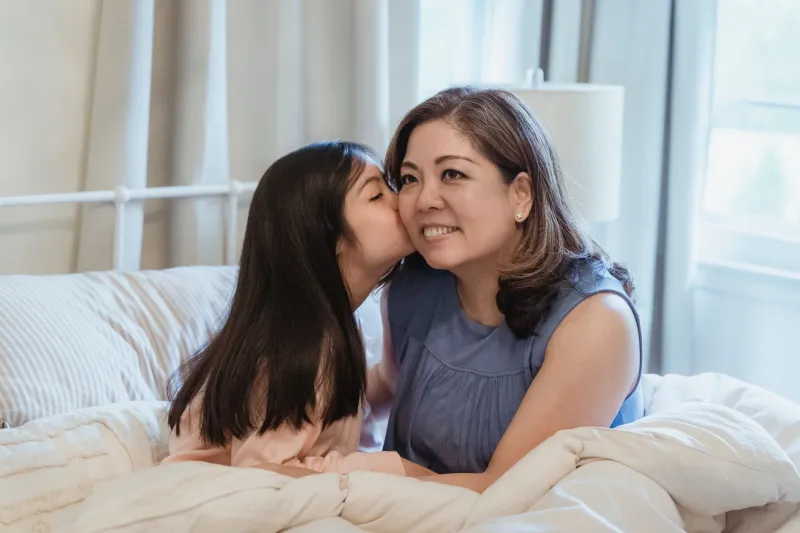
Picture this: it's 7:42 a.m., you're running late for work, someone can't find their left shoe, and the toddler is refusing to wear pants. In the middle of that chaos, you crouch down, tap your fist to your child's fist, then your elbow, then your forehead — the silly handshake you invented last spring. Your kid grins. Something settles. And you both walk into the day a little lighter.
That moment took about ten seconds. But according to attachment researchers, moments like it do outsized work. Here's the good news for every stretched-thin parent: connection isn't about quantity of time. It's about the reliability of small ones.
Why Your Child's Brain Loves a Ritual
Attachment science has a simple takeaway: kids build security not from grand gestures but from predictable, repeated signals that say you matter to me, and I'll be here. Psychologists sometimes call these "micro-moments of connection," and consistency is the magic ingredient — far more than duration.
Rituals also act as emotional anchors during transitions, which are the hardest parts of a young child's day. Drop-offs, mealtimes, and bedtime all involve separation or shift. A tiny ritual tells your child's nervous system: this part of the day is known, safe, and ours.
And here's the part parents don't hear enough: rituals regulate you, too. That handshake at the classroom door? It's a breath for you as much as for them.
A Menu of Micro-Rituals (Pick One, Not All)
The trap with connection advice is that it can turn into another to-do list. Don't. Choose a single ritual that fits naturally into a moment you already have. Once it runs on autopilot, add another if you want.
At drop-off: A secret handshake, a kiss on each palm to "hold onto all day," or a two-word code phrase only your family knows. Teachers at quality early learning centers will tell you the fastest goodbyes are the ones with a familiar script.
At pickup: Instead of "How was your day?" (which gets you a shrug), try "One high and one low." Same idea, better odds of an answer.
At dinner: The "two-question game" — everyone at the table, adults included, answers the same two silly questions. "Would you rather have spaghetti for hair or meatball toes?" Absurd questions unlock real conversation with preschoolers.
In the car: One song that's "ours." Rotate who picks it, or don't — repetition is the point.
At bedtime: A "sunset recap" of three things from the day, or a fill-in-the-blank: "Today I noticed you ___, and it made me ___." Ten seconds, powerful signal.
When you're apart: Draw a tiny heart on your child's wrist in the morning — a "connection mark" they can look at whenever they miss you. Childcare teachers see kids touch these marks all day long.
The Rules That Actually Matter
Consistency beats length. A ten-second ritual done daily outperforms a two-hour outing done monthly. Your child's sense of security is built on pattern, not occasion.
Presence beats perfection. If you miss a day, skip the guilt spiral. Rituals aren't a performance review. Just pick it back up tomorrow — the repair itself teaches your child that connection is resilient.
Let your child co-author it. The rituals that stick are the ones kids help invent. If your four-year-old wants the handshake to include a chicken dance, do the chicken dance. Ownership deepens the bond.
Put your phone somewhere else. A ritual done while scrolling is just a task. Sixty fully-present seconds register differently in a child's brain than ten distracted minutes.
What If It Feels Awkward at First?
It might — especially if your own childhood didn't include much of this. That's normal. Think of rituals as a language you're learning rather than a talent you lack. Start with the least performative option (the wrist heart, the two-question game) and let it grow from there.
And if your child seems indifferent at first? Keep going, gently. Rituals often land before they're acknowledged. One day you'll hear your kid explaining the handshake to a friend, and you'll realize how much it mattered all along.
The Long Game
Years from now, your child probably won't remember the elaborate birthday parties or the Pinterest-worthy lunches. But there's a real chance they'll do a fist-tap-elbow-forehead handshake with their own kid someday, without even knowing where it came from.
That's the quiet power of small rituals. They don't just brighten an ordinary Tuesday — they become part of the story your child carries forward. And you can start tonight, in under a minute.