One Bin, One Year: A Sane System for Saving the Artwork (and Your Sanity)
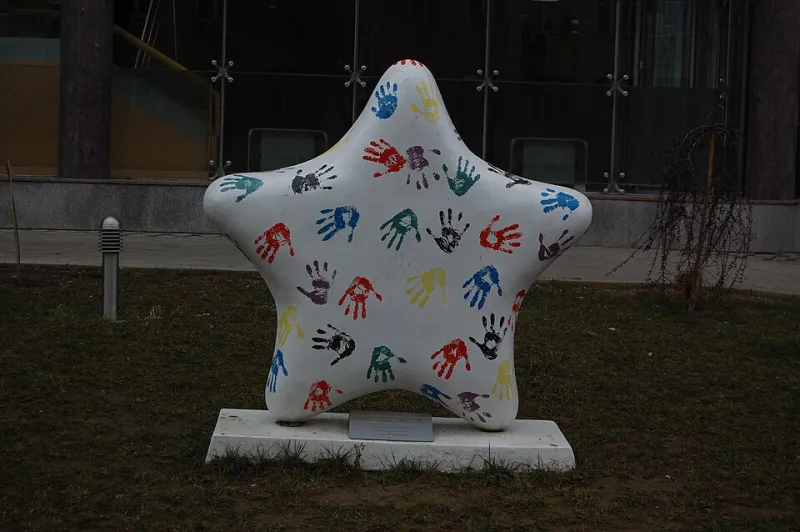
Photo: Andy Mabbett, CC BY-SA 3.0, via Wikimedia Commons
There's a moment every parent knows. It's 8 p.m., the kitchen is finally clean, and you're standing over the counter holding a painting that is — and let's be honest here — mostly brown. Your child made it. Your child loves it. Your child asked this morning if you'd keep it forever.
And you have 437 other ones just like it in a growing pile.
Nobody hands you a manual for this part of parenting. So let's build one together — a realistic, guilt-free system for saving what matters from ages zero to five, without renting a storage unit.
First, Absolve Yourself of the Archive Fantasy
Somewhere out there is the myth of the perfect baby book: every milestone photographed, every lock of hair labeled, every scribble preserved in acid-free sleeves. If that's you, wonderful. For the rest of us, the perfect is exactly what's preventing the good.
Here's a liberating truth: your child will not remember the individual paintings. What they'll remember is that their creativity was valued. A curated, loved collection of twenty pieces tells that story better than a water-damaged box of two thousand.
The Core System: One Bin, One Year
The whole method fits in a sentence: one plastic bin per year of your child's life, nothing that doesn't fit goes in the bin.
Grab a standard 12-quart storage bin per kid — clear ones work best, and a dozen of them cost less than one fancy memory album. Label it with the school year: 'Mia — Age 3.'
Everything eligible for saving goes in the bin: artwork, the birthday card from Grandma, the hospital bracelet, the macaroni necklace, the 'certificate of participation' from the library summer reading program. When the bin is full, the bin is full. That's the rule, and it's the rule that does the work.
The physical limit forces the curation decisions that guilt otherwise makes impossible. You can't keep everything, so you keep what actually means something — and 'does this fit in the bin?' is a much easier question to answer than 'is this precious?'
Seven Moves That Make It Work
1. The staging shelf, not the guilt pile. Designate one spot — a drawer, a basket, a shelf — where incoming art lands. Nothing goes straight to the bin or the trash. It waits on the shelf for a week or two. After a week, most pieces reveal themselves: some genuinely matter, and some were process, not product.
2. Photograph the rest. Before recycling the overflow, snap a quick photo. Pro tip: photograph the art with your kid holding it when you can. A picture of a beaming four-year-old with a purple handprint turkey beats the turkey itself every time.
3. Rotate a gallery. Hang a few current pieces at kid height — a strip of washi tape on the wall works, or a simple wire with clips. When new art goes up, old art comes down and heads to the staging shelf. Your child's work is displayed and honored; your refrigerator is not buried alive.
4. The 'top ten' rule for school years. At the end of each school year, do one pass through the bin and pull your ten favorites to keep on top. Everything else stays in the bin, but now the best of the year is easy to find in a decade.
5. Digitize in batches, not real time. Once a year — maybe around the New Year, maybe on the kid's birthday — spend one evening photographing or scanning the year's keepers into a single folder. Apps designed for this can turn the folder into a printed photo book. One book per year, ordered every few years, makes a gorgeous coffee-table archive your child will actually look at as a teenager.
6. Save the words, not just the art. The drawing of your family where the dog is bigger than the house is cute. But the audio clip of your three-year-old singing the wrong lyrics to a favorite song, or the note that says 'I love you so mach Mom'? That's the gold. Capture voices and words, not just paper.
7. Let them co-curate by age five or six. Around kindergarten, kids can start choosing what to keep themselves. This turns memory-keeping into a conversation — 'Which of these is your favorite?' — and quietly teaches them that not everything has to be saved to have mattered.
What to Do With the Big Stuff
Handprint ceramics, growth charts, the quilt made from baby clothes — the oversized items need their own strategy. Keep one or two truly significant 3D objects per bin and let the rest go, or designate a single 'treasure box' per child for the bulky keepsakes. The rule of thumb: if it can't be stored in the child's assigned footprint, it doesn't stay.
The Real Point of All This
Here's the thing about the brown painting. The goal was never to preserve every artifact of early childhood. The goal is to be able to sit down with your eighteen-year-old someday, open a couple of tidy bins, and travel through their first five years together — laughing at the purple turkey, remembering the macaroni phase, seeing the whole arc of a little person becoming a big one.
That story doesn't need two thousand pages. It needs the right ones.
One bin. One year. That's it. Now go recycle that pile on the counter — you've got a photo of the good ones already.