The One-Word Answer Mystery: Cracking the Code of Your Preschooler's 'Fine'
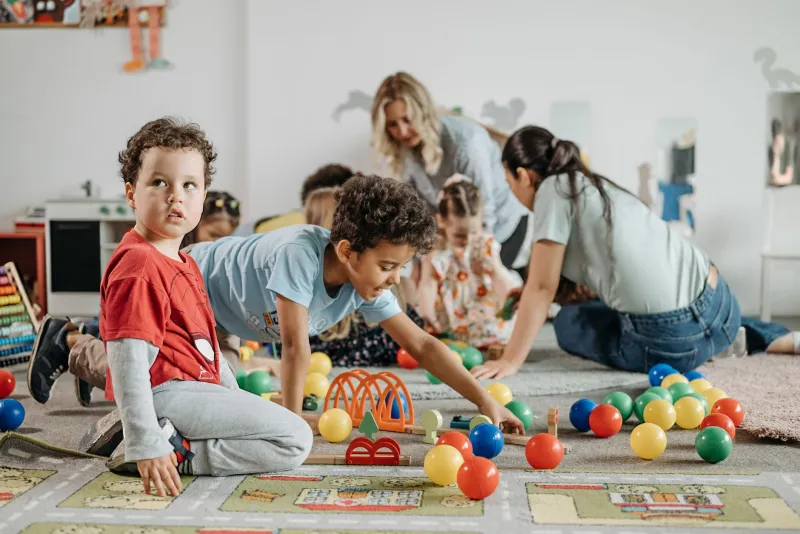
You've been counting down the hours since drop-off. You open the classroom door, crouch down to eye level, and ask the question you've been rehearsing all day: "How was your day?"
And the answer is... "Fine."
Or maybe it's a shrug. Or a grunt. Or a full-body sprint toward the snack cabinet, leaving you standing there with a paint-splattered art project and zero intel. If this sounds familiar, take a breath — you haven't raised a tiny diplomat with a confidentiality agreement. You've raised a four-year-old whose brain is doing exactly what four-year-old brains do at 5 p.m.
Why 'Fine' Is Actually the Correct Answer
Here's the thing adults forget: the end of a preschool day is not the time your child has the most to give. It's the time they have the least.
Think about what you're like after a long day of meetings. If your partner asked you to "give a detailed report on your day, including your emotional state," you'd probably also say "fine" and reach for the remote. Young children spend enormous mental energy all day — regulating emotions, sharing toys, following directions, remembering which hook their backpack goes on. By pickup, they're running on fumes, and conversation is the first thing to go.
There's also a developmental piece. Preschoolers live in the present. "How was your day?" is a huge, abstract question about an eight-hour block of time that already feels like ancient history. Their brains simply aren't wired to summarize it on demand. It's not stonewalling — it's cognitive overload wearing a tiny sneakers disguise.
The Real Report Card Is Already in Your Hands
Before you ask a single question, look down. You're holding more information than any verbal debrief could give you.
The shoes tell a story. Muddy knees? Playground equipment was involved. One sock missing? There was probably a spirited debate about socks. Mismatched shoes might mean your child asserted independence at the cubby — a developmental win, even if it's a laundry inconvenience.
The artwork is a mood ring. A chaotic swirl of orange and black might mean big feelings got processed on paper. A careful, controlled drawing suggests a focused, settled day. And if the paper is blank except for a name written very, very large? That's a kid who spent the morning declaring their presence to the world.
The lunchbox is a weather report. A demolished lunch usually signals a hungry, busy day. A mostly-full box could mean a distracted kid, a tummy issue, or a buddy who was more interesting than the sandwich. None of these are emergencies — but they're conversation starters hiding in plain sight.
The mood at pickup is data, not a verdict. A tearful reunion doesn't mean they had a terrible day. Often it means they held it together beautifully for hours and finally feel safe enough to fall apart. Teachers call this the "restraint collapse," and counterintuitively, it can be a sign of a secure attachment to you.
Ditch the Question That Gets Ditched
"How was your day?" is a big, wide-open question, and big, wide-open questions get one-word answers. The fix is specificity — the smaller the question, the bigger the door it opens.
Try swapping in one of these on the drive home or over snack:
- "What made you laugh today?" Humor is a preschooler's love language, and this one almost always gets a real answer.
- "Who did you sit next to at lunch, and what did you talk about?" This unlocks the social world without demanding a full friendship debrief.
- "Was there a hard part today?" Framing difficulty as a normal, expected part of the day teaches kids that struggles are discussable, not shameful.
- "Show me how you do the circle-time song." Sometimes the best question isn't a question at all — it's an invitation to perform. You'll learn what they did, how they feel about it, and get a free concert.
- "If today was a color, what color would it be?" Emotional literacy disguised as a silly game. "Red and bumpy" tells you more than "fine" ever will.
One more trick: side-by-side beats face-to-face. Staring directly at a tired kid feels like an interrogation. Chatting while walking to the car, buckling a seatbelt, or peeling an orange creates low-pressure conversation where answers can slip out sideways.
When to Lean In Instead of Backing Off
Most one-word answers are pure exhaustion, and the best response is patience plus a second chance. Many parents find the real report comes at bath time or bedtime, when the day has settled and the child is recharged.
That said, keep an eye out for patterns that deserve a closer look:
- A sudden, sustained shift in pickup mood — a child who's consistently tearful or withdrawn week after week
- Reluctance about a specific person, place, or activity that doesn't fade
- Big changes in appetite, sleep, or potty habits alongside emotional changes
- Play that repeatedly re-enacts something scary or upsetting
One rough Tuesday is childhood. Two weeks of distress signals are worth a friendly chat with the teacher — not as an accusation, but as teamwork. Great early childhood educators want that conversation and usually have a front-row perspective on what's going on.
The Long Game
Here's the quiet payoff of all this effort: the way you handle "fine" now is practice for the tween years. Kids who learn that their parents ask curious, specific, judgment-free questions — and don't panic at the answers — keep talking. The car ride home from preschool is where the habit of honest conversation gets built, one "what made you laugh today?" at a time.
So tomorrow at pickup, skip the interrogation. Check the shoes, glance at the art, ask a small question, and let the answer come on its own schedule. The story of their day is in there. You just have to give it room to come out.