Not on the Guest List: Helping Your Preschooler Navigate the Birthday Party They Missed
The invitation came home in a cubby — glittery, addressed to everyone in the morning class except your kid. Or maybe you found out the harder way: a Saturday full of party chatter at the playground while your child asks why they weren't asked.
Oof. If your stomach just dropped, you're in good company. Few things sting quite like watching your small person get left out — and almost nothing triggers our own grade-school memories faster. But here's the reframe worth sitting with: how we handle exclusion in the early years matters more than the exclusion itself.
First, Check Your Own Backpack
Before you say a word to your child, take an honest internal inventory. Are you upset because they seemed hurt — or because you remember being the kid nobody picked? Early childhood educators see this constantly: a four-year-old shrugs off a party they never knew happened, while the parent spirals for a week.
Young children live largely in the present. If your child didn't hear about the party, there may be nothing to process at all. Resist the urge to bring it up "so they can talk about it." Sometimes we hand our kids a wound they hadn't noticed.
When It's a Non-Event (and When It's a Pattern)
Most of the time, a missed party means exactly nothing. Guest lists get capped by budget, space, and the sheer chaos of twenty five-year-olds hopped up on cake. Many families invite by neighborhood, carpool route, or whoever happens to be at gymnastics that week. It is rarely personal. Preschoolers are not yet strategic social operators — they're just small humans with limited planning skills.
What's worth a closer look:
- A repeated pattern. If your child is routinely excluded from group activities and seems aware of it, that's different from one skipped cupcake celebration.
- Your child expresses distress. Phrases like "Nobody likes me" or refusing to attend school deserve gentle follow-up.
- Changes in behavior. Sleep troubles, tummy aches on school days, or withdrawing from play they used to enjoy.
If you see a pattern, a quiet chat with the teacher is your best first move. Preschool teachers have a front-row seat to social dynamics and can tell you whether this is typical wobbly four-year-old friendship stuff or something that needs scaffolding.
What to Say When It Comes Up
So your child knows, and they're sad. Skip the fix-it reflex and the dismissal reflex alike. Here are some scripts that work:
Validate first, always: "You really wanted to go to Maya's party. It's disappointing when we miss out on fun things." That's it. Don't rush past the feeling.
Avoid the trash-talk trap: It's tempting to mutter "Well, Maya's mom is ridiculous," but kids absorb that. You're modeling how to handle hurt — with grace, not grudge-holding.
Normalize without minimizing: "Sometimes parties are small and not everyone fits. It doesn't mean Maya doesn't like you." This is honest — most of the time it's genuinely true.
Look forward, not backward: "Want to have a playdate with someone from your class this week?" One-on-one time builds friendships far more reliably than group party dynamics ever will.
The Coach's Playbook for Building Social Muscle
Think of yourself less as a fixer and more as a coach. A few things that genuinely help:
- Practice entry phrases. A lot of preschool exclusion is clumsy, not cruel. Kids who don't know how to join a game get left out. Try: "Can I ask, 'Can I play too?' — want to practice with me?"
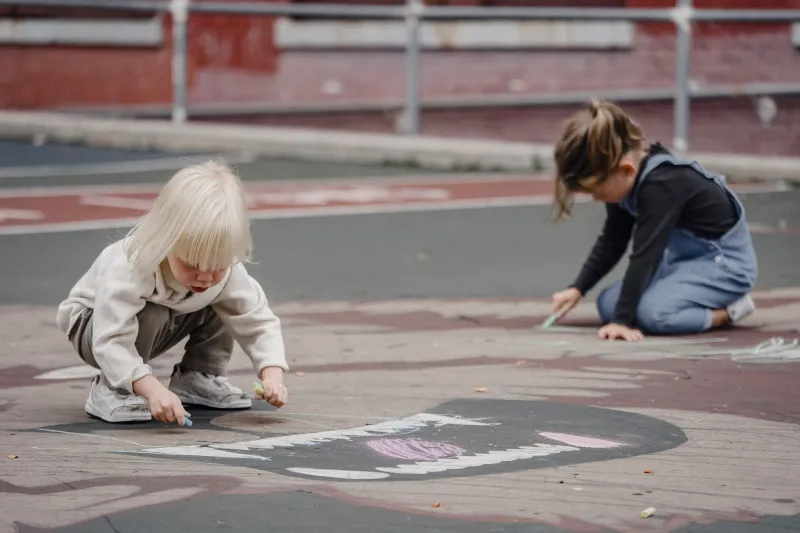
- Host the low-stakes hangout. A simple afternoon at the park with one classmate does wonders, for your child's friendships and your own parent-network sanity.
- Read stories about it. Books about feeling left out give kids language for big feelings at a safe distance.
- Watch your face. Kids read us like billboards. A calm, matter-of-fact response teaches them that a missed party is survivable — because it is.
What Caregivers and Classrooms Can Do
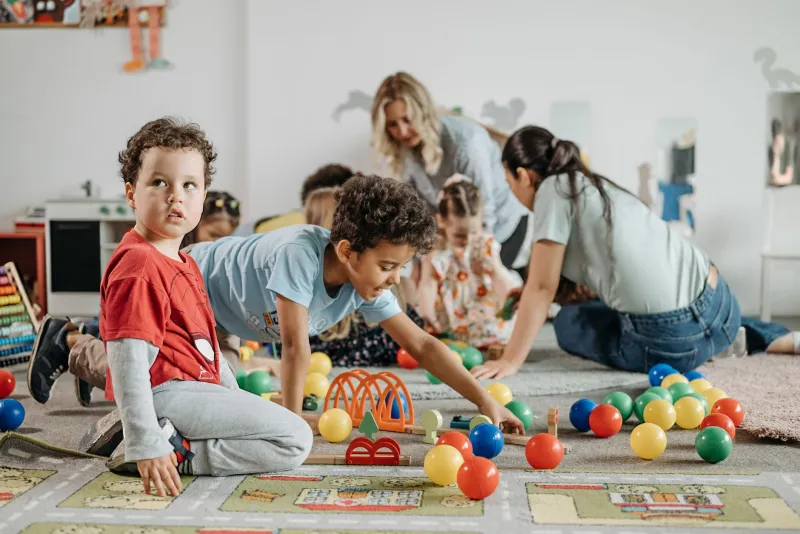
If you're a teacher or childcare provider, you shape this daily. Small moves add up: rotating play partners during centers, talking about invitations as "something families decide" rather than friendship declarations, and gently redirecting playground exclusive-speak ("Everyone who wants a turn gets a turn at the water table"). Some centers adopt a whole-class celebration norm for birthdays — stickers or a special song for everyone — which takes the guest-list politics out of the cubby entirely.
The Long Game
Here's the quiet truth: your child will be left out of things many times in their life, and they'll leave others out sometimes too, usually without malice. Every small, handled-well moment now builds a kid who can weather disappointment, extend grace, and walk up to the swings and ask to play.
So grieve the glittery envelope for a minute if you need to — privately, in the minivan, with the radio up. Then hand your kid a snack, head to the park, and let them show you how resilient they already are.