Raising Two (or Three, or Four): How to Actually See Each Child as Their Own Person
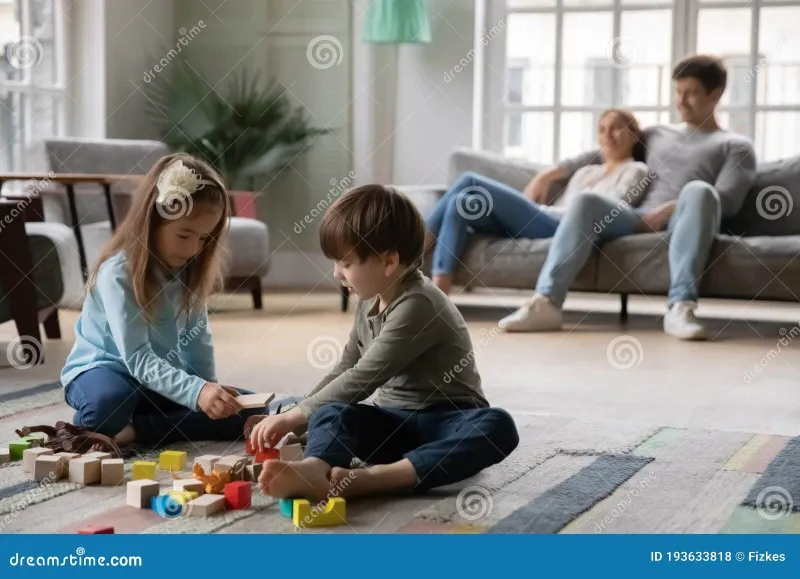
Photo: parent spending one on one time with child while siblings play nearby, via thumbs.dreamstime.com
When 'The Kids' Becomes a Category Instead of People
Somewhere around the second or third child, something subtle starts to happen in many households. The language shifts. You stop saying 'Maya needs more time with books right now' and start saying 'the kids need to be in bed by seven.' Decisions get made in bulk. Routines get designed for efficiency. And slowly, without anyone intending it, each child's distinct developmental identity starts to blur into the group.
This isn't a character flaw. It's logistics. When you're managing multiple young children — each with their own sleep schedules, emotional needs, activity levels, and growth stages — the path of least resistance is treating them as a unit. It saves time. It saves mental energy. It keeps the household moving.
But children don't develop in units. They develop one at a time, in deeply individual ways. And when a child senses — even without the language to articulate it — that they're primarily seen as part of a group rather than as themselves, it shapes how they understand their own identity and their place in the family.
So how do you honor individuality when you're already running on empty? Let's get specific.
Why Developmental Stage Matters More Than Birth Order
A lot of multi-child parenting advice leans heavily on birth order theory — the responsible firstborn, the creative middle child, the free-spirited youngest. And while there's some truth to how family position shapes personality, it can also become a trap. When you see your kids through the lens of their order, you risk missing what's actually happening developmentally for each of them right now.
A four-year-old is in a completely different cognitive and emotional world than a seven-year-old, even if they share a bedroom and a last name. The four-year-old is deep in imaginative play and beginning to understand cause and effect. The seven-year-old is developing logical thinking, navigating social comparison, and starting to build a more stable sense of self. What each of them needs from you — in terms of language, challenge, comfort, and independence — looks very different.
Spending even a few minutes regularly thinking about each child as a developmental individual — where is this particular kid right now, and what do they need most? — can meaningfully shift how you engage with them.
One-on-One Time: Small Doses, Big Impact
You've probably heard that one-on-one time matters. What's less often discussed is how little of it you actually need for it to register.
Research on attachment and parental connection consistently shows that it's not the quantity of exclusive time that matters most — it's the quality and the consistency. Fifteen minutes of genuinely focused, child-led interaction, where your phone is away and your attention is fully theirs, can be more meaningful to a child than a whole afternoon spent in the same room while you're half-distracted.
For families with multiple young children, this is actually encouraging news. You don't need to carve out elaborate solo outings for each child every week (though those are wonderful when they happen). You need to build in small, predictable windows where each child knows they have you — really have you.
Some practical ways this can look:
- A ten-minute "your choice" activity before a sibling's nap ends
- A monthly "special breakfast" where one child picks the meal and you eat together before the others are up
- A dedicated bedtime rotation where one parent does a longer, more conversational tuck-in with a different child each night
- A weekly errand where one child rides along and gets full conversational attention in the car
None of these require a lot of time. All of them send the message: you, specifically, matter to me.
The Comparison Trap — And How to Dismantle It
Siblings compare themselves to each other constantly. That's developmentally normal — children are wired to figure out where they stand, and their most immediate reference points are the people they live with. What parents control is whether comparison becomes a frame the family lives inside.
Well-meaning comments like "your brother never had trouble with this" or "why can't you be more patient like your sister?" don't just sting in the moment. They communicate that a child is being evaluated against a sibling rather than seen on their own terms. Over time, this can fuel resentment, erode confidence, and create a competitive dynamic that makes genuine sibling closeness harder to build.
The alternative isn't pretending children are identical. It's being specific and individual in how you notice and celebrate them. Instead of comparing, try narrating: "You worked really hard on that puzzle — I saw you try three different pieces before you found the right one." That kind of observation doesn't require any reference to what anyone else did. It just reflects the child in front of you back to themselves.
The Middle Child Dilution Effect
There's a particular dynamic worth naming for families with three or more children: what some child development researchers informally call the "middle child dilution" effect. It's not that middle children are inherently disadvantaged — it's that they're structurally at risk of receiving less individualized attention simply because they're neither the eldest (who gets the intensity of first-time parenting) nor the youngest (who often gets extended nurturing).
Middle children can become expert self-soothers and remarkably adaptable — which looks like a strength and often is. But it can also mask a quiet need for more direct connection and acknowledgment than they're currently getting.
If you have a middle child, it's worth asking honestly: when did I last have an extended one-on-one conversation with this kid that wasn't about a problem or a conflict? When did I last ask them something genuinely curious about their inner world?
The fix isn't dramatic. It's just intentional.
Managing the Logistics Without Losing the Individual
None of this works if you're running on fumes. Sustainable individualized parenting in a multi-child household has to be built into the structure of daily life, not added on top of it.
A few structural habits that help:
Keep individual records, even loosely. A notes app entry every few weeks per child — what they're into, what's been hard, what made them laugh — helps you track individual development without relying on memory alone.
Resist the urge to always do things together. Some activities genuinely work better with one child at a time. Leaning into that occasionally, rather than always defaulting to group logistics, creates natural individual moments.
Talk about each child individually with your co-parent or support network. When the conversation is always about "the kids," it reinforces the group frame. Deliberately bringing up one child's specific experience keeps each of them visible.
They're Growing Up Together, But They're Not Growing Up the Same
Siblings who grow up in the same house, eating the same dinners and going on the same family trips, can still have profoundly different childhoods — shaped by where they were developmentally during key moments, how much individual attention they received, and whether they felt seen as themselves or primarily as part of a set.
The goal isn't to treat every child identically. It's to treat each child appropriately — which means knowing enough about who they are, right now, to meet them where they actually are.
That's a tall order on a Tuesday when everyone needs something at once. But the intention behind it — the genuine effort to see each child as their own whole person — is something kids feel. And it's one of the things they carry with them long after they've left your house.