Let Them Be Bored: The Surprising Gift of Doing Nothing for Young Kids
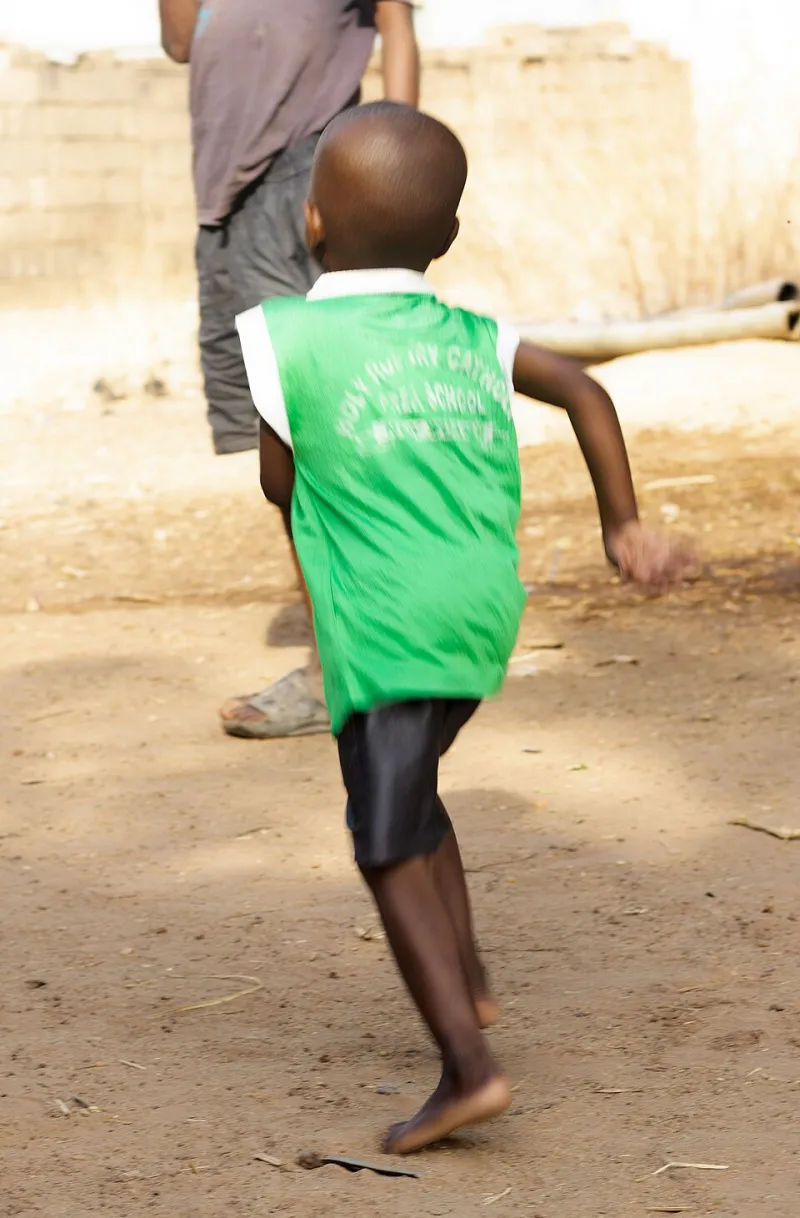
Photo: Tahiru Rajab, CC BY-SA 4.0, via Wikimedia Commons
It's a Tuesday afternoon. Your four-year-old has finished lunch, screen time is done for the day, and they're standing in the middle of the living room announcing — with full dramatic energy — that they are bored. Your instinct might be to grab a puzzle, suggest a craft, or flip on a learning video. But what if the best thing you could do right now is... nothing?
Yep. Nothing.
Boredom gets a bad reputation in modern parenting culture. We've been conditioned to believe that a stimulated child is a thriving child, and that empty time is somehow wasted time. But developmental researchers are pushing back on that idea in a big way — and what they're finding might genuinely change how you think about your child's afternoons.
Why We're So Uncomfortable With 'Nothing'
American parents today are under enormous pressure to optimize childhood. From baby music classes to STEM kits for toddlers, the message is everywhere: more input equals better outcomes. And it makes sense that we'd internalize that. We love our kids. We want to give them every advantage.
But somewhere along the way, "giving them everything" started to mean "filling every moment." The result? Kids who struggle to entertain themselves, who look to adults to direct their play, and who feel anxious when there's no agenda.
The irony is that in trying to enrich our children, we may actually be shortchanging them — specifically in the areas of imagination, independence, and emotional self-regulation.
What Happens in the Brain During Unstructured Time
Here's where it gets genuinely fascinating. When children are left without a structured activity, their brains don't just idle. Neuroscientists have identified something called the default mode network — a system that activates precisely when we're not focused on a task. It's during this "mind-wandering" state that the brain does some of its most important work: making connections, processing emotions, generating novel ideas.
For young children, this translates into imaginative play. That moment when boredom tips over into "I'm going to make a spaceship out of couch cushions" or "let's pretend the backyard is an ocean" — that's the default mode network firing on all cylinders. Your child isn't just killing time. They're building the mental architecture for creative thinking and problem-solving.
Dr. Stuart Brown, founder of the National Institute for Play, has spent decades studying how unstructured play shapes brain development. His research consistently shows that free play — the kind kids invent themselves without adult direction — is critical for developing flexibility, empathy, and the ability to navigate uncertainty. These aren't soft skills. They're lifelong assets.
Resilience Gets Built in the Boring Moments
There's another dimension to this that doesn't get talked about enough: emotional resilience.
When a child experiences boredom and has to sit with that discomfort — even briefly — they're actually practicing emotional regulation. They're learning to tolerate an unpleasant feeling without immediately having it resolved by an outside source. Over time, that builds a quiet kind of confidence. "I was bored, and I figured it out."
Kids who are constantly entertained don't get those reps. And when something genuinely uncomfortable comes along — a hard day at preschool, a conflict with a friend, a situation that doesn't go their way — they may find themselves less equipped to cope.
Unstructured time, in a low-stakes way, is actually practice for life.
What 'Unstructured' Really Means (It's Not Neglect)
Let's be clear about something: embracing boredom doesn't mean leaving your child completely to their own devices or withdrawing engagement. It means resisting the urge to direct.
You can be present. You can be available. What you're pulling back on is the script.
Some practical ways to create space for unstructured play:
- Rotate toys instead of adding more. A smaller selection of open-ended materials — blocks, art supplies, dress-up clothes, cardboard boxes — invites more creative use than a room overflowing with single-purpose toys.
- Resist the first request. When your child says "I'm bored, what should I do?" try responding with "Hmm, what do you feel like?" You don't have to have the answer.
- Protect unscheduled time on purpose. If every afternoon has an activity, try clearing one. Not as punishment — as a gift.
- Go outside without a plan. A backyard, a park, or even a porch with some open space and no agenda does wonders. Nature is one of the best boredom antidotes because it's endlessly interesting on its own terms.
- Let the restlessness happen. The transition from "I'm bored" to "I'm playing" can take 10 or 15 minutes. That's okay. That's the process working.
The Guilt Piece — Because It's Real
Many parents feel genuine guilt when they're not actively engaging with their child. If you're sitting nearby while your kid figures out how to entertain themselves, it can feel like you're being a passive parent. You might wonder if you should be doing more.
You're not being passive. You're being intentional.
At Aspire Education Care, we work with families every day who are navigating this balance. One of the most consistent things we hear from parents is relief when they learn that backing off a little — creating space rather than filling it — is actually a developmentally sound choice. It's not laziness. It's trust.
Trusting your child to be capable. Trusting the process of development. Trusting that not every moment needs to be curated.
A Different Kind of Enrichment
We're not saying structured activities don't have value — of course they do. Music, storytime, art projects, sports, and learning programs all contribute meaningfully to early development. The issue isn't structure itself; it's the ratio.
When every hour is scheduled, children never get the chance to discover what they're drawn to on their own. They don't get to practice the art of beginning something from scratch, of following their own curiosity down an unexpected path.
Some of the richest learning in early childhood doesn't come from a curriculum. It comes from a kid who was bored, picked up a stick, and spent forty-five minutes building something in the dirt — figuring out physics, storytelling, and persistence all at once.
The next time your child hits you with the dreaded "I'm bored," try taking a breath before you respond. That moment of restlessness? It just might be the beginning of something great.